
happy little moments

You’re Not Behind as a Mom: What Actually Matters in Early Childhood
Do you ever feel like you’re not doing enough for your child?
Like you can’t quite get your head above water long enough to support your child’s learning, keep the house running, manage your calendar, and stay on top of work?
I’m writing this because this has been my own experience lately. So I know I’m not the only one feeling this.
With three young kids and a business, once I feel like I’ve tackled one thing, something else (like the laundry) pulls me right back under. It’s a never-ending cycle.
But just because the laundry is piled up or there are dishes in the sink doesn’t mean you’re falling behind as a mom.
Sometimes I don’t even think about dinner until it’s almost dinner time…and that’s with a meal plan. Sigh. I think we’ve all become a little scattered in this ultra-digital world.
But this means you’re normal. Especially if you’re juggling a lot.
It’s just that none of us really talk about it.
So what actually matters in early childhood development? When you strip everything else away, it’s not about doing more. It’s about focusing on the things that truly support your child’s growth, learning, and long-term success.
what really matters in early childhood?
1) Presence
It all starts with presence.
Your child doesn’t need you perfectly organized. They need you present.
Not all day, every day but consistently and without distractions.
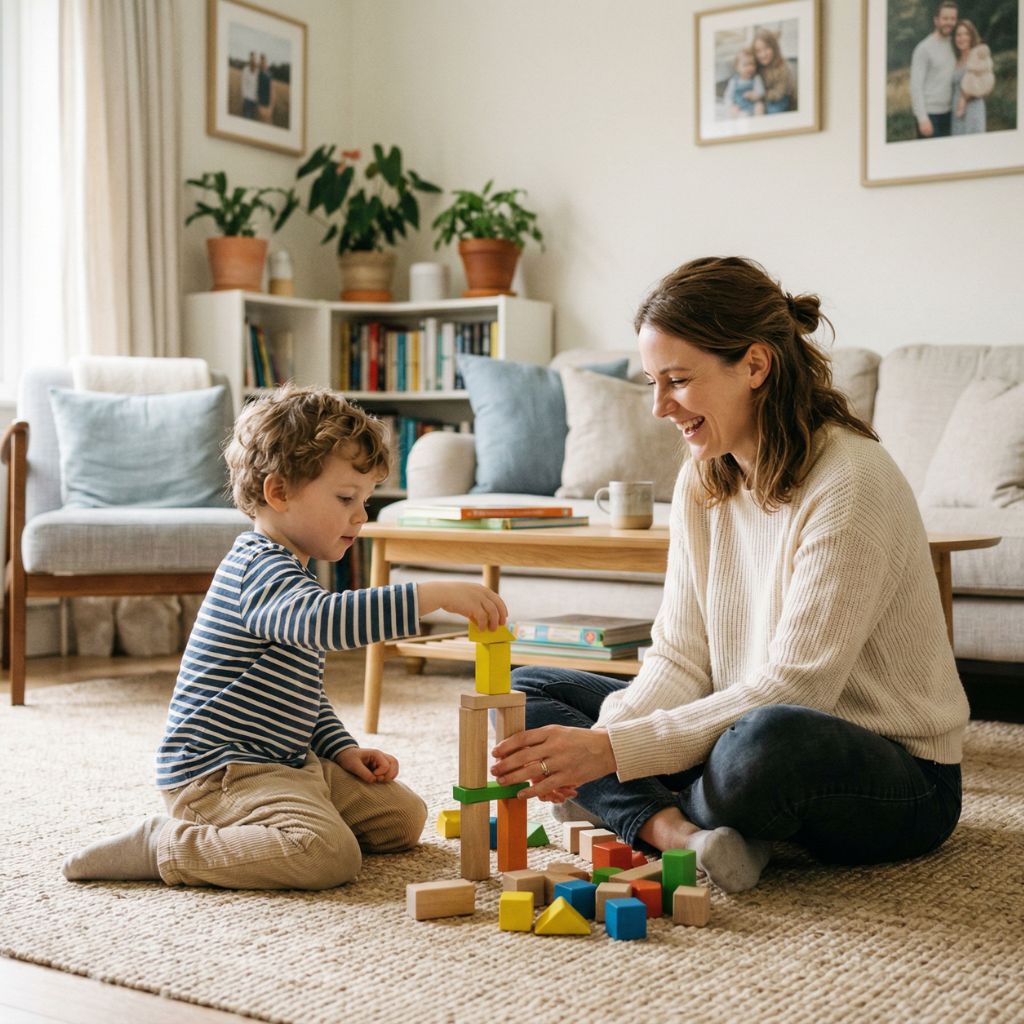
Twenty minutes of your undivided attention, getting on the floor, playing, talking, stepping into their world does more for their development than hours spent “together” while you’re distracted.
Put your phone away. Sit with them. Go outside. Take a walk.
That connection builds trust, security, and emotional safety. And that foundation matters more than anything else as they grow.al
2) consistent routines
Simple, consistent routines make a big difference.
Children thrive on predictability. When they know what’s coming next, they feel more secure, more confident, and less overwhelmed.
Transitions, like moving from playtime to mealtime, are naturally hard for young children. But when those transitions are part of a consistent daily rhythm, they become much easier to navigate.
“This is what we do next.”
That sense of rhythm creates stability. And honestly, it helps us as moms, too. A predictable flow to the day can bring a surprising amount of calm.
3) play-based learning
This is one of the most important (and most misunderstood) parts of early childhood education.
After working in early childhood development for the past nine years, I’ve seen this over and over again: play-based learning is far more effective than worksheets when it comes to preparing children for kindergarten.
Children are wired to learn through play.
When they’re building with blocks, using play dough, picking dandelions, or playing pretend, they’re developing fine motor skills, problem-solving abilities, creativity, and social understanding.
They’re building the exact skills they need for school, just in a way that feels natural to them.
Play is not separate from learning. Play is learning.
4) Language development
Language development is another area that matters more than most people realize.
And the good news is, it doesn’t have to be complicated. It’s built through simple, everyday interaction.
Talking with your child. Narrating what you’re doing. Asking questions. Expanding on their words.
“Let’s pour the milk.”
“Look at that flower…what do you see? What do you notice?”
These little moments build your child’s vocabulary, comprehension, and confidence over time.
Reading together is just as powerful. Even a couple of books a day (done consistently) can make a huge impact on your child’s language development and early literacy skills.
It’s learning and seeing new words, watching the faces of chararters, and talking about what is happening in the book that makes all the difference. Your child is putting together language and building an understanding of the world around them, all through reading books with you.
It’s the small, repeated actions that matter the most when teaching your little ones.
5) emotional safety
And underneath all of this is something even deeper: emotional safety.
Children need to feel safe, seen, and accepted. Even when they’re upset. Even when they’re struggling. Maybe most importantly when they’re upset or struggling.
This looks like staying calm during meltdowns (as much as you can). Validating their feelings when they are upset…saying reassurances like, “That was really frustrating, wasn’t it?”
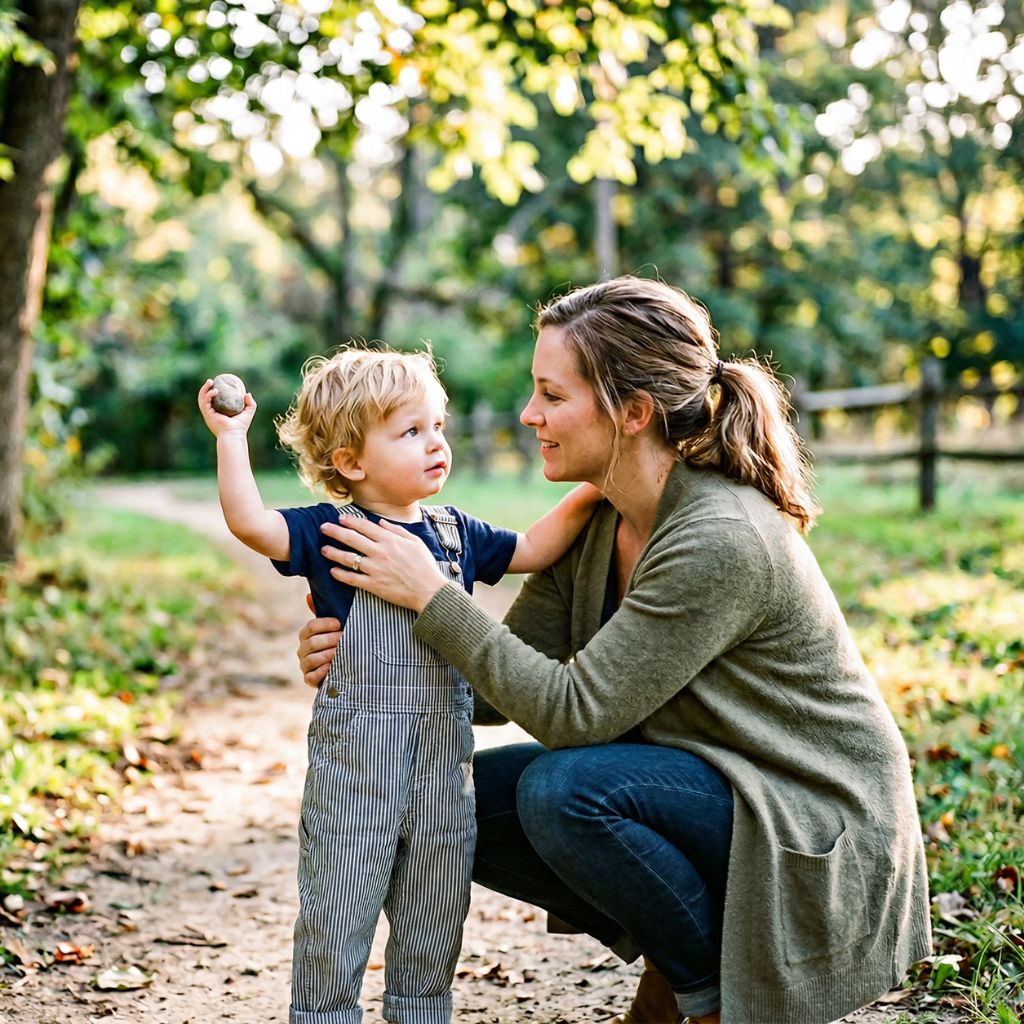
And also, repairing after hard moments…“We don’t throw rocks. But mommy shouldn’t have yelled. I’m sorry.”
You don’t have to get it right every time. The repair matters more than perfection. Our kids need to know we’re human, too.
a quick note about screens
Screens come up often so…
I’m not anti-screen. Let’s be real, sometimes it’s nice to get a little break. Emphasis on little.
Young children shouldn’t be on them very much. Not even every day, especially for our 2 and unders. Doctors even recommend no screens at this age.
But for young developing children, always keep in mind that less screen time is better. No screens is best.
As a fellow mom, I’m also realistic.
Remember, the constant dopamine from our phones and tablets affect a developing child’s focus, behavior, and overall development. It even affects us as adults, so just imagine what it’s doing to a mind that’s still making sense of the world.
And there’s more and more research to back that up.
If you decide to allow screens in your household (especially in early childhood), make it short, intentional, and well-supervised.
in conclusion
When you step back and look at the big picture, early childhood isn’t about doing more.
It’s about being present, creating simple routines, and giving your child the space to learn everyday. These are the things that actually shape who they become.
And if you’re a busy mom trying to be more intentional, but not sure how to fit it all in—you’re not alone.
This is exactly why I started creating simple, structured ways to bring these kinds of learning moments into everyday life… without adding more overwhelm.
Because it doesn’t have to be complicated to be meaningful.